“Respect is something Otis achieved for himself in a way few people do. Otis sang ‘Respect when I come home.’ And Otis has come home.” – Eulogy delivered by Jerry Wexler

Otis Ray Redding Jr., born in Dawson, Georgia, to Fannie Roseman and Otis Redding Sr., was the fourth of six children. His father was a sharecropper, worked at Robbins Air Force Base, and sometimes preached at local churches.
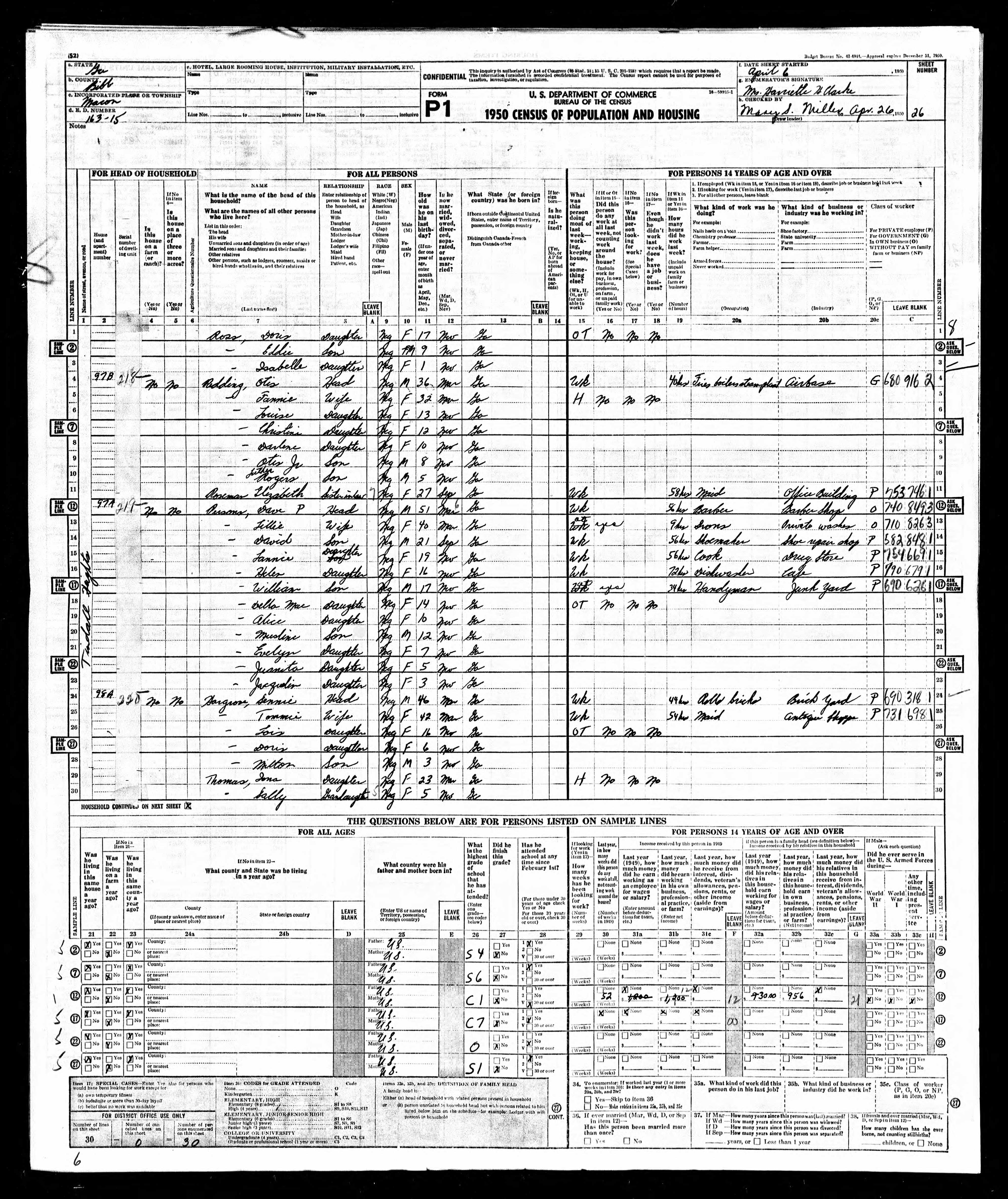
On the 1950 census of Macon, Georgia, the Redding family consisted of father, Otis, Mother, Fanny, and children Louise, Christine, Darlene, Otis, and Luther. Also living with the family was Fannie’s sister Elizabeth. Otis Sr., at this time, worked in the boiler room in the steam plant at the air base. Elizabeth was a maid in an office building.
It was a working-class neighborhood of shoemakers, handymen, and dishwashers. One woman held a job that was probably common in the 1950s but pretty much unheard of today. She was a cook at a drugstore. Everyone on the page was born in Georgia.
Later life
Otis was musical from the start, learning guitar, piano, and drums, plus singing in the church choir. He earned $6 every Sunday singing gospel songs on a local radio station and won the $5 prize in a teen talent show 15 weeks in a row.
When his father came down with tuberculosis, he quit school at 15 to help support the family. He worked as a well digger, gas station attendant, and musician. His music career progressed from local bands to southern USA regional bands and finally national attention. His first major recording was These Arms of Mine, which sold 800,000 copies.
He performed at the Apollo Theater in 1963 and by 1967 had released six albums. He performed at Whisky a Go Go and in London. When he arrived in London, the Beatles sent a limousine to pick up him and his crew. Later he did a tour of Europe.
In 1967 he had a breakthrough performance at the Monterey Pop Festival. Jan Inglis in Performance and Popular Music: History, Place and Time said “he had not been considered a commercially viable player in the mainstream white American market. But after delivering one of the most electric performances of the night, and having been the act to most involve the audience, his performance at Monterey Pop was, therefore, a natural progression from local to national acclaim…the decisive turning point in Otis Redding’s career.”
In early December 1967, he recorded (Sittin’ On) The Dock of the Bay. He was inspired by Sgt. Pepper’s Lonely Hearts Club Band, and wanted a similar sound. His record label was against this. His wife didn’t like the melody. The recording crew didn’t like it, thinking it was not R&B and would damage the label’s reputation. Redding thought it was his best song and would be a hit.
Three days later, he died when his private plane crashed en route to a show in Madison, Wisconsin.
(Sittin’ On) The Dock of the Bay reached number 1 on the charts. Redding received posthumous Grammies for the single and the album. He was inducted into the Rock and Roll Hall of Fame in 1989. They declared his name to be “synonymous with the term soul music that arose out of the black experience in America through the transmutation of gospel and rhythm and blues into a form of funky, secular testifying.”
Among the artists who call him a musical influence are:
- George Harrison called “Respect” an inspiration for “Drive My Car“.
- Led Zeppelin
- Grateful Dead
- Lynyrd Skynyrd
- The Doors
- Al Green
- Etta James
- William Bell
- Aretha Franklin
- Marvin Gaye
- Janis Joplin learned “to push a song instead of just sliding over it” after hearing Redding.
- Barry and Robin Gibbs of the Bee Gees wrote To Love Somebody for Redding and he planned to record it.
The whole Redding story is here.
Other happenings on September 9, 1941:
- Allied convoy SC 42 was sighted near Cape Farewell, Greenland by the German submarine U-85. Over the next three nights, a total of 16 ships from the convoy were sunk by a German Wolfpack.
- Iran agreed to the terms of the occupying Allied forces. All Axis-aligned consulates would be closed and German nationals would be turned over to the British or Russians. The Allies would control Iranian roads, airports, and communication.
- Congressional hearings opened in Washington investigating allegations of propaganda in American films. North Dakota Senator Gerald Nye set the tone of the hearings on the first day by suggesting that propaganda was being injected into films by a cabal of foreign-born Jews who owned or operated the major movie studios.
- German submarine U-162 was commissioned.
- Born: Dennis Ritchie, computer scientist, in Bronxville, New York (d. 2011)
- Died: Hans Spemann, 72, German embryologist
Tomorrow – A movie star who rose from the trenches of World War I
Please subscribe to our newsletter to receive each day’s entry in your email box.
Sources
- Wikipedia.org
- Ancestry.com
- Onthisday.com
- Picryl.com
- Youtube.com
 Famous People and Their First Census