“Havana, Cuba, in which city yellow fever had not failed to make its yearly appearance during the past one hundred and forty years… Havana was freed from yellow fever within ninety days.” – Walter Reed
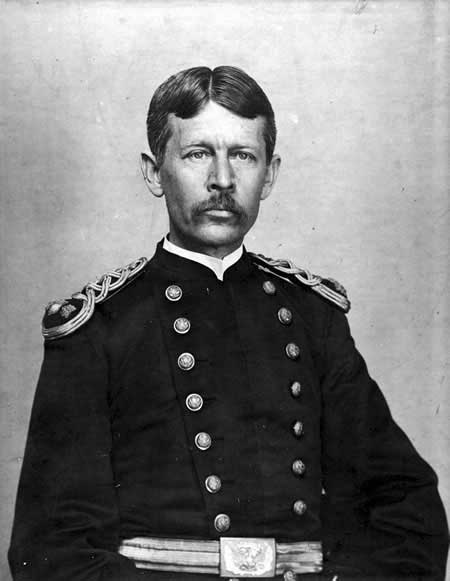
Walter Reed was born in Belroi, Virginia, to Pharaba (White) and Lemuel Sutton Reed, a Methodist minister. He was their fifth child.

The 1860 census for Bedford, Virginia, shows Methodist clergyman Lemuel Reed living with his wife Pharaba and five children, Laura, James (who became a minister), Thomas, Christopher (who became a judge), and Walter. Among the neighbors, there is another minister, printer, attorney, and laborer. Everyone on the page is a native Virginian except for the entire Reed family (save Walter) and one neighbor, all of whom are from North Carolina.
Later life
Walter earned his M.D. in 1869 from the University of Virginia, the youngest ever to receive an M.D. from the school. He earned a 2nd M.D. from New York University’s Bellevue Hospital Medical College in Manhattan and went to work for the New York Board of Health.
Reed joined the U.S. Army Medical Corps in 1875. Most of his postings were in the American West where he cared for military members, their families, and Native Americans, including Geronimo. Upon seeing the effects of epidemics, he was very concerned about sanitary conditions.
In 1896, he had his first success as a medical investigator. He showed that drinking water was not the cause of yellow fever and that soldiers who walked through a swampy area were more likely to come down with yellow fever than those who didn’t. While in Cuba he and his colleagues showed that contact with fecal matter and food or drink contaminated by flies caused a typhoid epidemic.
He became interested in the theory of Cuban medical scientist Carlos Finlay who posited that mosquitos were the cause of yellow fever and even identified the species that caused the disease. Reed’s experiments proved Finlay’s theories. The experiments would probably not be undertaken today due to ethical and political concerns regarding human subjects.
Reed has been hailed as the man who defeated yellow fever but always credited Finlay with identifying the source and proposing the method to curb its spread. Another Army physician, William Gorgas, was instrumental in controlling the disease which allowed the completion of the Panama Canal where 10% of the workforce had been dying each year.
Reed suffered a ruptured appendix and died of peritonitis at age 51 in 1902. His name appears on many schools and research centers, most notably at Walter Reed General Hospital in Washington, D.C.

Other happenings on September 13, 1851 – Nothing major.
Tomorrow – A lone man – but he has a friend
Please subscribe to our newsletter to receive each day’s entry in your email box.
Sources
- Wikipedia.org
- Ancestry.com
- Onthisday.com
- Picryl.com
- Youtube.com
 Famous People and Their First Census